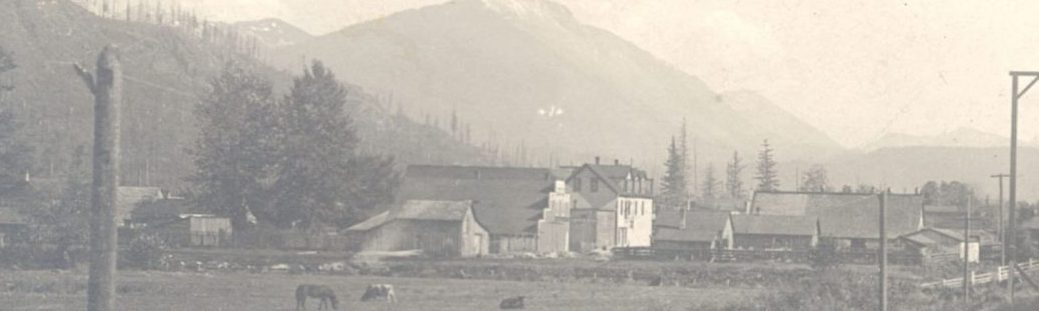


Josiah “Uncle Si” Merritt (c. 1814–1882)
Josiah Merritt—widely known as “Uncle Si”—arrived in the Snoqualmie Valley in 1862. The prominent peak now known as Mount Si was named in his honor, a reflection of his early presence and lasting local reputation.
Originally from Ohio, Merritt left his wife, Sally, and their three young children during the California Gold Rush, joining thousands who sought economic opportunity in the West. Like many prospectors, he did not find success in California. Years later, when news of gold discoveries in British Columbia’s Cariboo region spread, he again set out in search of fortune. Traveling from Seattle along the old Cedar River pack trail, he was diverted into the Snoqualmie Valley. Impressed by the landscape and its potential, he decided to remain.
Merritt filed a land claim along the Middle Fork of the Snoqualmie River, west of what later became the Boalch property. Approximately forty acres of his claim consisted of open prairie. Because his homestead lay near the base of the valley’s most prominent peak, fellow settlers began referring to the mountain as “Uncle Si’s Mountain.” Over time, the name was shortened to Mount Si.
Contemporary accounts describe Merritt as physically strong, direct in manner, and resilient. He had a hearing impairment and lived with a significant foot disability, yet he managed the demanding labor of frontier farming. He built a cabin near a small creek flowing into the Middle Fork. Two successive cabins on the same site were destroyed by fire. Merritt attributed the fires to local Native residents, though other settlers later questioned that conclusion. Like many early settlers, his relationships with Native people were complex and at times strained. Records indicate that he lived for a period with a Native woman, though little documentation survives to provide further context.
Despite physical limitations, Merritt cultivated potatoes, vegetables, and an orchard, and he raised livestock, including hogs. To plow his fields, he devised an extended plow handle that allowed him to ride a horse while directing a team of oxen—an inventive adaptation that compensated for his injured foot. Transporting goods to market was arduous. Reaching trading points required crossing the South Fork of the Snoqualmie River and navigating difficult terrain, often on rough pack trails.
One oft-repeated story recounts how Merritt once saved $150 in silver to pay taxes and purchase supplies in Seattle. He secured the heavy bag to his saddle horn and traveled as far as Fall City, staying overnight with neighbors. The next day, while riding through deep mud near Squak Valley (now Issaquah), the bag apparently came loose. By the time he noticed, the money was gone—likely lost in a mud hole. Despite searching, he never recovered it.
Another story illustrates the realities of travel in early King County. While journeying with neighbor Jerry Borst from Fall City to Snoqualmie Prairie, darkness overtook them. They attempted to camp but had only one match. When it failed, they were forced to keep moving throughout the night, walking in circles to stay warm.
After more than two decades away from his family—and without correspondence during that time—Merritt eventually accumulated enough money from the sale of livestock to return to Ohio. Though his children had grown and were nearly strangers to him, his wife Sally had remained legally and personally committed to the marriage. She had declined opportunities to remarry, stating she would only do so if she had proof of his death. Merritt persuaded her to sell their Ohio home and return west with him, accompanied by their youngest son.
Upon Sally’s arrival in the Snoqualmie Valley, Merritt constructed a larger cabin to accommodate the family. (That structure later burned in 1912.) Sally is remembered as one of the earliest non-Native women to settle in the valley. Frontier isolation proved extremely difficult for her. With few neighbors and long stretches alone while her husband worked, she experienced profound loneliness. Accounts note that she found comfort in smoking a pipe and in occasional visits from nearby settlers who brought small supplies and companionship.
One local story describes an incident in which Merritt went out to track a bear that had been threatening livestock. After Sally heard a gunshot and he did not immediately return, she feared he had been injured. He later arrived safely, explaining that he had shot the bear and taken time to skin it before coming home.
Sally lived on the homestead for approximately two years. The isolation and emotional strain took a toll on her health. Eventually, family members from the East came to assist, and she relocated with relatives to Eastern Washington. Though pioneer accounts claim she died not long afterward, she outlived her husband passing away after 1890.
In his later years, as his health declined, Merritt left his homestead and moved to Fall City to live with neighbors. In February 1882, after working outdoors splitting rails, he became ill with pneumonia and died within days. He was buried in the Fall City cemetery.
Josiah Merritt’s life reflects both the determination and the hardship that characterized early settlement in the Snoqualmie Valley. Though shaped by the limitations and attitudes of his era, his name endures in the landscape—Mount Si standing as a reminder of the valley’s pioneer past.