

Guest Post by David Dreyer
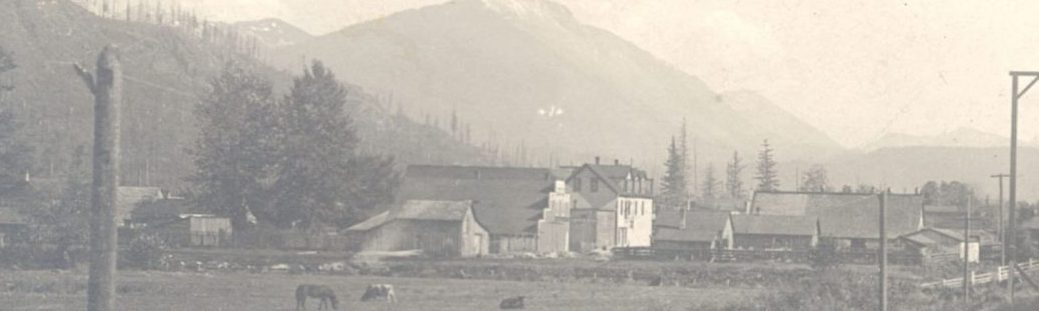
My father, Bill Dreyer, apprenticed as a boiler maker with the Union Pacific. He worked as a welder and heavy equipment repair for the contractor, Guthrie and Co., which was building the Cascade tunnel under Stevens Pass for the Great Northern. With the termination of that project my folks moved to Snoqualmie where he initially worked as a welder and on equipment repair at the Weyerhauser mill. He was never very happy about working for someone else and after a year, about 1931 or 1932, went into business for himself. He built a facility, “The Welding Shop,” located on the north side of the old main highway about halfway between Snoqualmie and North Bend.

Jobs came from truckers passing by, jipo logging operations, local dairies (Issaquah creamery, among others), contractors working on road improvement jobs up on the pass, Preston mill, but above all from North Bend Timber Co. In time he acquired a partner, Howard Platt.
North Bend Timber was a good fit for someone with boiler maker skills needed for maintenance of steam locomotives in the railroad logging days and the steam donkey era with their large upright boilers.
By the late 1930s stands of second growth timber on valley bottom land which had been initially logged in the earlier pioneer period, started reaching maturity so that it was economically feasible to begin harvesting them. Most of this timber was in small patches on the valley floor or adjacent lower slopes. Dreyer realized there was a market for a simple yarder to manage logging those settings located largely on relatively flat terrain.

To this end they built a foundry adjacent to the existing shop building to cast the drums. This foundry building consisted of a welded frame, constructed of used boiler tubing covered in sheet metal. After casting, the drums could be machined with existing shop equipment. For the yarder they built a frame from heavy steel channel iron and for power could employ a salvaged diesel truck engine. Such usable engines could be found at the nearby auto wrecking yard run by the Vezzoni brothers located just down the road towards Snoqualmie at the corner of the main highway, where the branch road joined which ran northward over to Meadowbrook. If memory serves the auto wrecking ran a Texaco gas station out in front.

All this planning and effort came to naught, WW II broke out and all structural steel was diverted to shipyards. Small time logging operations did not rate a high priority for steel during the war. Moreover, about this time North Bend Timber Company (NBTC) converted from railroad to truck logging and arrangements were made for the shop to maintain their truck fleet. When not employed, log trucks could be found parked along the frontage road from the shop all the way northward to the Meadowbrook road.
After a couple of years the whole arrangement, was sold to NBTC and the shop’s equipment was moved to their facilities at Tanner. At that point Dreyer began working for NBTC at Tanner.
Several years previously, through the agency of Angus Moffit, manager of Meadowbrook farms, Bill Dreyer he had bought 80 acres of farmland located at the farthest Western edge of the cultivated area of the Yakama Indian Reservation. Beginning January 1945 he gave up employment with NBTC and the family moved to While Swan on the reservation and began farming the 80 acres along with an adjacent leased 40 acres, all devoted to alfalfa hay. It appears that this 120 acres of alfalfa had been a satellite operation of Meadowbrook farm, established to furnish a supply of cattle feed during the winter months. This arrangement lessened the need for putting up large amounts of hay on the home farm in Meadowbrook. In Eastern Washington there were three alfalfa hay cuttings a season. The hay was put up in large stacks and could be fed out to cattle on site or bailed later and trucked over to the pass to the coast as storage space permitted or as otherwise needed.
